
Is Your Off-Site Culture Hindering Your Innovation?
How to Lead in High-Stakes Environments
In the office, we have HR policies, ergonomic chairs, and inclusive meeting protocols. But what happens to your culture when the team goes into the field? Whether it's a three-month film shoot in a remote location or a high-pressure executive retreat, these off-site environments are where your culture is truly tested.
My research into Fieldwork Environments reveals that these spaces often operate by a different set of unwritten rules—rules that frequently reward Legacy Identities and unintentionally exclude your innovative, diverse talent.
The Ruggedness Trap
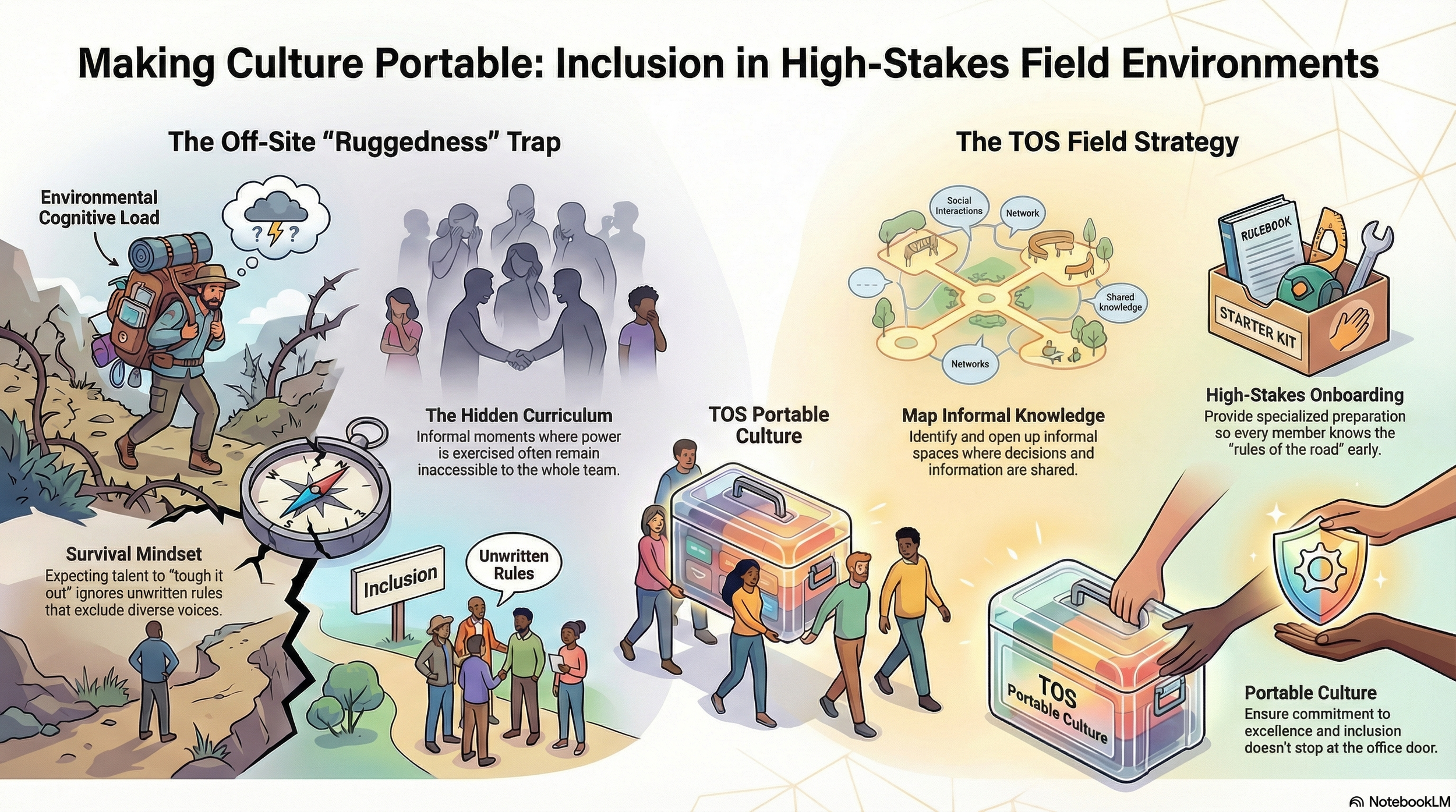
When we leave the controlled environment of the office, many leaders default to a survival mindset. They assume that if a team member is talented, they will simply tough it out. But this ignores the Environmental Cognitive Load. If a team member is spending a portion of their mental energy navigating a new physical environment—or trying to break into informal social circles where the real decisions are being made—they have limited mental energy left for the actual work.
Bringing the Headquarters to the Field
At Transformative Organizational Strategy (TOS), I help you make your culture portable. I ensure that your commitment to excellence and inclusion doesn't stop at the lobby door.
TOS Field Operations Strategy includes:
Mapping the Hidden Curriculum: TOS identifies the informal moments where knowledge is shared and power is exercised, ensuring these are made accessible to the entire team.
Cognitive Load Management: TOS audits your logistics to ensure that physical and social barriers aren't draining the creative energy of your talent.
High-Stakes Onboarding: TOS provides specialized preparation for remote or intensive projects, ensuring every team member knows the rules of the road before the first day on site.
The Bottom Line
Your team shouldn't have to survive your off-site environments; they should thrive in them. By designing for inclusion in your most challenging locations, you ensure peak performance no matter where the work takes you.
Read more about the research behind this Case Study:
Is your team ready for the field?