
The Hidden Map: Why Your Official Org Chart Isn't Enough to Drive Change
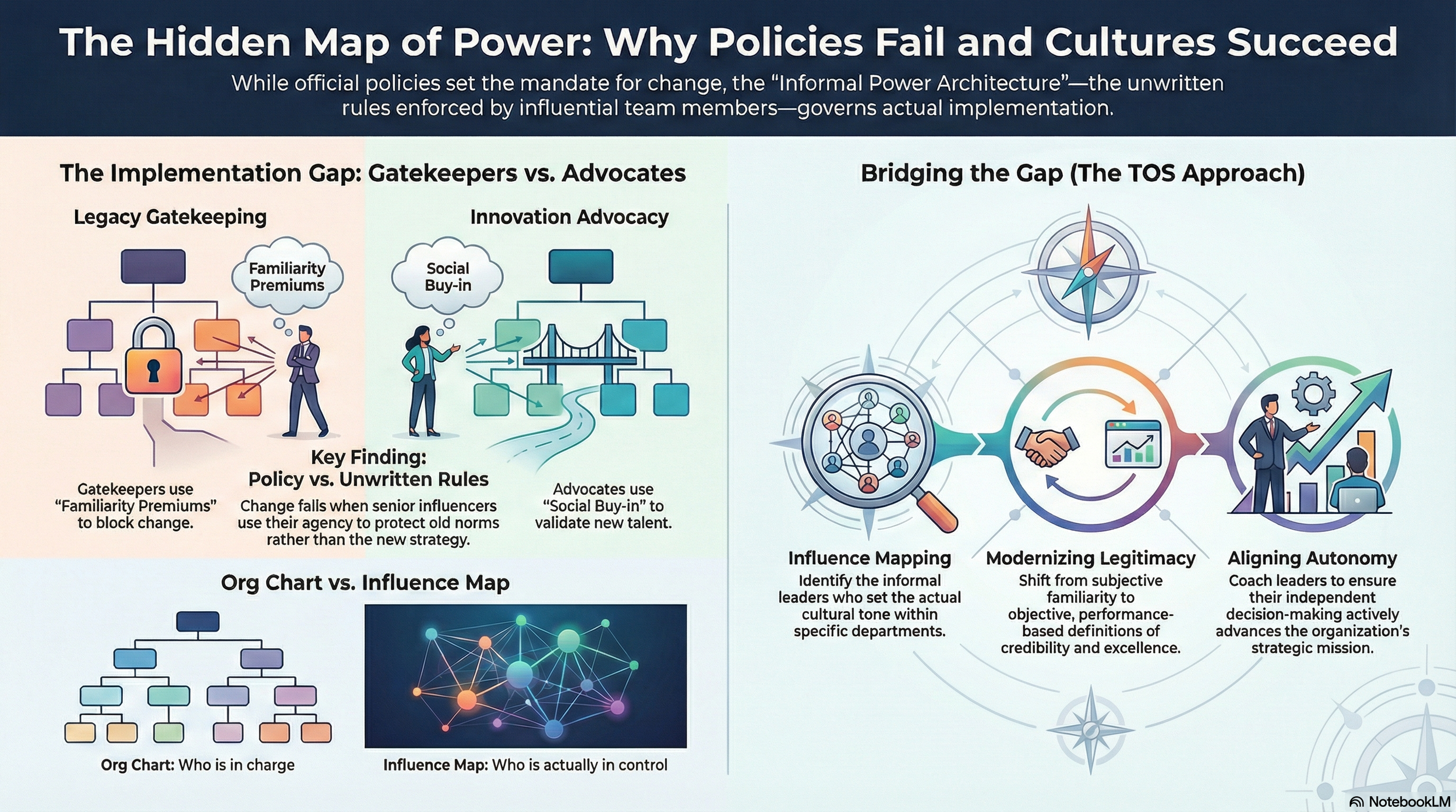
You’ve likely seen it happen: two units within the same organization are given the exact same mandate, the same resources, and the same hiring targets. One year later, one unit has a vibrant, diverse new cohort of leaders, while the other remains exactly as it was, claiming they “just couldn't find the right fit.”
When a strategic plan fails in one room but succeeds in another, the problem isn’t the plan. The problem is the Informal Power Structure.
Beyond the Policy: The Power of Informal Gatekeeping
In my research into organizational transformation, I’ve found that change doesn’t happen through official HR policies alone. It happens through the unwritten rules enforced by your most influential team members.
I studied two distinct units—let's call them The Legacy Group and The Innovation Group—to see how they handled the same call for cultural change.
The Legacy Group: Protecting the "Standard"
In this unit, senior influencers used their agency to act as gatekeepers. They leveraged what I call Legacy Capital—an invisible familiarity premium given to candidates who looked, spoke, and worked like the existing team.
The Result: Diverse high-performers were scrutinized as high-risk, while traditional legacy candidates were seen as safe bets. The unit used its autonomy to shield itself from change, treating diversity as a threat to their perceived prestige.
The Innovation Group: Leveraging Influence for Growth
In this unit, the power players did something different. They used their status to validate new talent. Instead of protecting old norms, they used their influence to clear hurdles for new voices.
The Result: By actively using their social buy-in to support diverse hires, they redefined what excellence looked like. They moved from a culture of compliance (doing what they're told) to a culture of advocacy (leading the way).
The Implementation Gap in Leadership
The gap between your mission and your reality is often filled by these informal power dynamics. If your senior staff is using their influence to protect "the way we’ve always done it," your strategic plan will fail every time.
At Transformative Organizational Strategy (TOS), I don't just look at your policies; I map your power. I help you identify the informal gatekeepers and turn them into Strategic Advocates.
How TOS Bridges the Power Gap:
Influence Mapping: TOS identifies the informal leaders who set the cultural tone in your departments.
Modernizing Legitimacy: TOS helps your teams move away from the Familiarity Premium and toward objective, performance-based definitions of credibility.
Aligning Autonomy: TOS coaches your leaders to ensure their independent decision-making is actually advancing your organization’s mission.
The Bottom Line
Change-ready leaders know that an org chart tells you who is in charge, but an Influence Map tells you who is in control. To bridge the gap, you have to align the informal power of your team with the formal strategy of your organization.
Read more about the research behind this Case Study: