
The Invisible Operating System: Why Your Strategy Needs a Structural Upgrade
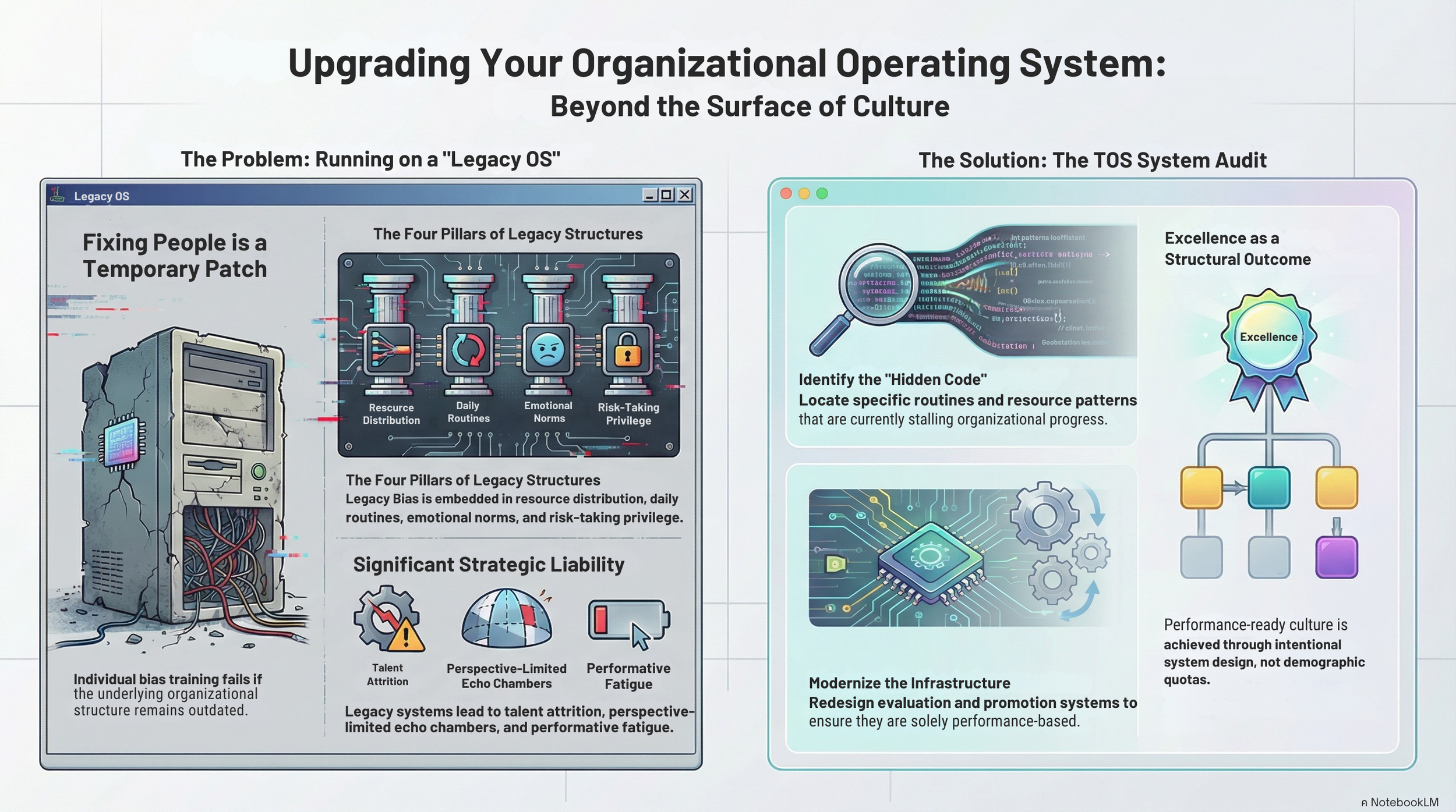
In the business, research, and creative worlds, we often talk about Company Culture as if it’s something we can simply announce or change with a new set of values. But after decades of research into high-stakes organizations, I’ve found that culture is more like an Operating System (OS). If your organization was built decades ago, it is likely running on a Legacy Operating System designed to prioritize a very specific, traditional demographic—it is a Structural Bias that silently filters out innovation, talent, and growth.
The Problem: We’re Fixing People, Not Systems
Most initiatives fail because they only try to attend to the people—through unconscious bias training or recruitment drives—without ever looking at the Operating System itself.
My research identifies that structural bias isn't just about individual opinions; it is embedded in the four core pillars of the organization:
The Resource Gap (Distribution of Power): Who gets the biggest budgets? Who gets the high-profile accounts? If your Legacy OS defaults to the same types of leaders, your resources will flow away from innovation.
Institutionalized Routines (The "Way We Do Things"): From how you run a meeting to how you evaluate a high-potential hire, your daily routines often contain hidden code that favors familiarity over performance.
The Emotional Geography (Cultural Norms): Every office has unwritten rules about emotion. If your culture only rewards specific social styles, you are unintentionally silencing some of your creative voices.
Agency & Influence: Who has the permission to take risks? In a legacy system, that permission is often an invisible credential granted to those who fit the traditional mold.
Why This is a Risk
Running a modern organization on a Legacy OS is a strategic liability. It leads to:
Talent Attrition: High-performers from diverse backgrounds will leave if they feel they are working against an invisible current.
Echo Chambers: If your Operating System only allows for one type of perspective, you will miss the shifts that your peers and competitors are catching.
Performative Fatigue: Your team will stop believing in your mission if they see that the unwritten rules never actually change.
The TOS Solution: A System Audit
At Transformative Organizational Strategy (TOS), I specialize in Organizational Assessment. I don't just give you a one-off training; I help you perform a deep audit of your Operating System.
TOS partners with you to:
Identify the Hidden Code: TOS finds the specific routines and resource patterns that are stalling your progress.
Modernize the Infrastructure: TOS helps you redesign your evaluation and promotion systems to be truly performance-based.
Empower Leadership: TOS coaches your leaders to recognize their own agency in disrupting legacy norms and building a future-ready culture.
The Bottom Line
Excellence is not a demographic; it is a structural outcome. If you want to lead a high-performance organization, you have to be willing to upgrade your system.
Is it time for a structural audit?